
Modern Business Intelligence: 7 Trends Defining the Future of Data Analytics
Table of Contents
Know All About The Key Role
Know the Strategic Advantages of Business Performance Analytics
What Does It Offer?
Know the Key Benefits
Real World Example: How Modern Business Intelligence Delivered a 60% Reduction in Reporting Time
Challenges Businesses May Face When Adopting Data Driven Decision Making
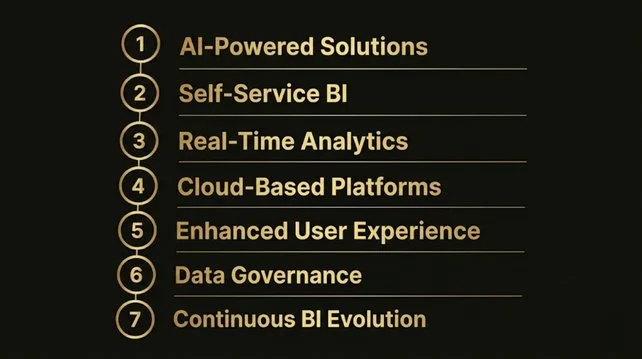
The Future of BI: Know the Key Trends
Conclusion
Frequently Asked Questions (FAQs)
Modern Business Intelligence is no longer a luxury reserved only for large enterprises, it has become the competitive base for any business that wants to have visible growth and not work on guesswork.
Businesses nowadays rely heavily on large volumes of data generated by tracking customer data, maintaining detailed transaction records, managing tax related information, and maintaining financial records. The efforts of any organization can fall short due to a gap between the data they gather and how well they use it.

Modern Business Intelligence is key to making well informed decisions. It is nothing but an amalgamation of technologies and strategies that a firm or business uses to gain valuable insights. It is a unique AI based system that enables users to convert raw data into actionable insights applicable across all levels of a business.
According to Fortune Business Insights, BI is expected to grow rapidly. In the coming years, its market size is expected to grow between $33.3 billion and $35.3 billion, with an annual growth rate of 9% to 9.5%.
In this blog, we will learn how modern business intelligence works, how it can benefit organizations, how it drives meaningful results and the current AI trends.
Looking for a smarter way to turn complex data into real time insights? Consult with NeuroDextra.
Know All About The Key Role
Business models operate on data such as inventory, client interactions, and business operations. Having data in one place is one thing, but understanding how to analyze and use it is a whole different matter.
With the right resources, such as Modern Business Intelligence, it can be simpler and less time consuming to identify trends, business opportunities, and future risks and threats.
It is the process of gathering, processing, and analyzing data, and then using the results to create tailored business strategies. Agencies use business intelligence for a variety of purposes, including:
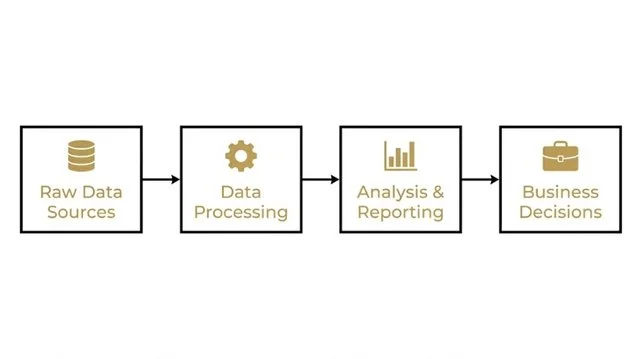
Reducing overall data processing time
Managing proactive inventory management
Harnessing the power of data
Assessing valuable insights
Reporting and analytics have now become essential components for maintaining operational efficiency and staying a step ahead of competitors.
Know the Strategic Advantages of Business Performance Analytics
Modern business intelligence offers an efficient way to utilize data and explore a much broader range of AI capabilities. This platform combines AI, Machine Learning, and Cloud Computing. This way, businesses no longer need specialized skills or additional knowledge to work with the data.
What Does It Offer?
Real time insights
Cloud based platforms
Easy to use interface
Interactive dashboards
Advanced analytics
Know the Key Benefits
1. Accurate Reporting
Modern Business Intelligence helps with the analysis of data, whether it’s a single page or multiple pages. Such platforms automate the entire process and create an easy to access, easy to understand report. The employees can share the report within the organization or with the clients without any hassle.
2. Better Data Insights
It offers a unique platform where any user can extract data from any source, whether internal or external. Instead of spending hours and increasing the team's workload, BI can help by using advanced analytics to convert complex data into an information base that enables the team to make smarter decisions in the future.

3. Quick Decision Making
Businesses often struggle to make decisions when accuracy and timely information are priorities. With modern business intelligence, businesses can leverage AI powered features to assess the current state of their business framework, identify trends, and make strategic decisions. Staff can now focus on more important tasks and explore problem solving options rather than worrying about repetitive data management tasks
4. Streamlining Workflow
Such tools and platforms also help organizations optimize their operations by monitoring overall production performance, managing inventory levels, and maintaining accurate logistics data. Continuous data driven analysis further streamlines the workflow, reduces operational costs, and improves overall performance. With such features and capabilities, businesses can manage their resources well in future.
5. Less Risk
Every startup or enterprise faces risks when managing financial data. There are many challenges, including regulatory compliance and market fluctuations, that can derail the entire business. Modern business intelligence can address such challenges by simply providing timely access to data. With features such as compliance monitoring and quickly acting to identify potential risks and opportunities, businesses can build resilience. Making the right financial decisions means greater financial visibility and more strategic decision making.
Learn how NeuroDextra's financial intelligence solutions support smarter risk management.
6. Competitive Edge
Strategic analytic tools offer a clearer picture of the data collected from different sources. Whether it’s understanding customer buying patterns or market trends, it can help businesses make decisions much faster, thus gaining a strong competitive advantage. Identifying which segment is more profitable and which sector needs more attention for revenue generation can help teams adjust their marketing efforts accordingly.
Want to stay ahead of competitors by using modern business intelligence solutions? NeuroDextra is here to help.
Real World Example: How Modern Business Intelligence Delivered a 60% Reduction in Reporting Time
A mid sized retail business was spending 3 - 4 days every month manually compiling sales reports from 6 different data sources. The finance team had no real time visibility into inventory levels or customer buying patterns, that means decisions were always being made on data that was already outdated.

After implementing a Modern Business Intelligence solution, the same reports were generated automatically in under 2 hours. The team identified a seasonal demand pattern they had missed for 3 consecutive years and used it to reduce overstock costs by 22% in the following quarter.
This is exactly what happens when businesses stop sitting on data and start using it. If your team is still spending days on reports that should take minutes, speak with NeuroDextra about a tailored BI implementation.
Challenges Businesses May Face When Adopting Data Driven Decision Making
While data analytics offers many benefits, there are also challenges associated with its implementation. Being aware of such challenges can help businesses address them and prepare in advance.
Data Silos
An organization’s data may be stored in across different systems and sources such as CRM platforms or accounting tools. It can be difficult to extract all the data, leading to inconsistent reporting even when the performance analytics are integrated.
Quality Issues
Data Driven decision making relies heavily on the accuracy of the data. If the data collected itself is outdated, duplicated, or inconsistent, the insights may vary or be incorrect. It is essential to validate and maintain the data files regularly.

Less Awareness
Modern Business Intelligence sometimes requires making changes to existing business workflows. Businesses concerned about data privacy or breaches can also form opinions without doing proper research into the use of BI. To tackle this, users need to implement strong security protocols and data compliance policies to ensure data privacy and security.
The Future of BI: Know the Key Trends
There is an intense competition among organizations to deliver better customer experiences, improve efficiency, and adapt quickly to market changes. Business owners can use BI solutions to make strategic decisions with confidence and accuracy.
Here are some of the latest modern business intelligence tools every business should know:
Trend 1: Increase Use of AI Powered Solutions
Over the past few years, Artificial intelligence has transformed how each industry used to function. Data analytics is expected to grow rapidly, helping users identify hidden patterns, detect unusual activity, and generate insights. AI powered solutions offer advantages ranging from automated data analysis and tracking to operational optimization and seasonal trend identification. Industries are starting to integrate AI powered systems into their existing operations to gain access to insights rather than raw data.
According to McKinsey's State of AI report, companies that have adopted AI driven analytics report up to 23% higher profitability compared to those still relying on traditional data methods.
Trend 2: The Demand for Self Service BI
Modern business intelligence has reduced manual workload and the heavy reliance on employees to work faster, reducing the risk of data inaccuracies or errors. Self Service BI allows businesses to access and analyze data on their own. They don’t need special infrastructure or training to get the results. This way, employees or users can create custom dashboards, assess current market trends, monitor key performance indicators at any time, and access data without additional technical expertise.
Key Advantages of Self Service Business Intelligence Include:
Quick decision making
Less reliance on IT teams or technical skills
24/7 secure data access
Enhanced productivity across departments
Easy to learn features for non technical users.
Trend 3: Usage of Real Time Analytics
Speed is one of the most critical factors and advantages of using such solutions. With accurate reports and data right at users' fingertips, businesses can gain a significant advantage. With modern business intelligence, tracking customer activity, monitoring shipments, managing risks, and making faster business decisions becomes easy.
For example, a logistics firm using real time BI can reroute shipments within minutes of a delay alert, something that previously required hours of manual tracking and cross team coordination.
Trend 4: Cloud Based BI Platforms Are On The Rise
Cloud based platforms offer greater flexibility and easier access than traditional BI systems. This, combined with cloud based solutions, offers strategic benefits such as faster deployment, greater scalability, remote access, and automatic updates and notifications. This makes cloud based platforms the ideal choice for both businesses and well established enterprises.
Trend 5: Enhanced User Experiences
Want to access data without switching between different applications? It is possible with modern business intelligence. The platform offers the option to embed analytics and integrate all the features directly into existing software. Meaning? No need for constant switching and confusion. The intelligence solutions can be integrated with existing CRM systems and customer service software.
A sales team, for instance, can access live customer purchase data directly inside their CRM without switching to a separate BI tool saving time and significantly reducing reporting errors.
Trend 6: More Importance to Data Governance
There is a need for strict security compliance, and businesses must protect their data and manage and store it properly. Modern business intelligence allows businesses to collect as much data as they want and keep it in one place without worrying about data security. Having a strong data governance policy help organizations maintain consistency, get secure user access and build trust in analytics results
💡 Expert Insight:
Data governance is no longer optional for businesses using BI. Without it, even the most advanced analytics platform produces unreliable outputs. The quality of your insights is only as good as the quality of your data governance.
– NeuroDextra Intelligence Team
Trend 7: The Constant Evolution of BI
Strategic analytics is unstoppable. From predicting future outcomes to analyzing historical data, it continues to grow, adding more user friendly features. Organizations can make the most of such opportunities by implementing BI solutions for:
Predictive BI is the clearest example of this evolution. Instead of telling you what happened last quarter, it tells you what is likely to happen next quarter and recommends what to do about it.
Forecasting future customer demands
Categorize data accurately
Allocate resources effectively
Analyzing campaign results
Learn from customer behavior
Reduce unnecessary costs
Eliminate guesswork and make better decisions
Conclusion
With the continuous growth and advancement in modern business intelligence, businesses can expect rapid innovation. With features such as cloud computing, real time analytics, accurate reporting, and data analysis, financial decisions can now be made much faster.
Organizations ready to embrace modern BI solutions can strategize to position themselves above their competitors by simply enhancing their operational efficiency. As businesses continue to generate more data, adopting modern BI solutions is becoming essential for improving efficiency, understanding customer needs, and responding quickly to changing market conditions.

Strategic analytics tools cannot ensure accuracy every time if the user does not know how to use them correctly. Having some prior knowledge regarding the data analytics tools, how their function and their features can help organizations train their staff in advance. Employees open to such technology will be able to work comfortably and focus on creating a cohesive workflow and data driven culture.
If you are searching for advanced, tailored modern business intelligence services, NeuroDextra is here to help. Get in touch with us today to learn more about automated business solutions and how we can help you integrate our solutions into your business.
If you are searching for advanced, tailored Business Intelligence services, NeuroDextra can help. Get in touch with us today to learn more about automated business solutions.
📖 You May Also Like:
Modern Business Intelligence: Trends Defining the Future of Data Analytics
Top 5 AI Consultancy Firms in Texas to Transform Your Business in 2025
5 Best Automated Financial Audit Platforms for Smarter Financial Management
6 Best Accounting Software for Firms to Streamline Financial Tasks
Benefits of AI Accounting Software for Audit for Modern Businesses
Intelligent Data Management Platform: 7 Ways It Powers Data Driven Decision Making
Agentic AI for Data Management: 7 Ways It Transforms Business Operations
FAQS
1. Why are reporting and analytics important?
Reporting and analytics enable businesses to access hands on, accurate data and analyze it to identify growth opportunities. Such solutions offer meaningful insights, helping businesses develop strategies that strengthen the foundation for smarter, data driven operations.
2. How is modern business intelligencechanging business workflow?
It allows businesses to uncover insights quickly and efficiently. It helps predict future data trends and understand customer behaviors. BI combined with AI driven solutions makes analytics accessible.
3. Can predictive analytics improve business performance?
Yes. Predictive analytics can help businesses analyze future demand, identify potential risks and opportunities and optimize inventory levels easily. It also helps companies allocate resources more efficiently
4. What role does cloud technology play in modern business intelligence?
Cloud technology platforms enable organizations to process and analyze data without additional infrastructure. From simplifying software updates to improving data integration, this platform helps businesses transform their operations digitally.
5. How does real time analytics benefit businesses?
Real time analytics provides instant access to data, eliminating the wait of hours or even days. This feature is ideal for businesses that require rapid response and offers additional advantages, such as fraud detection and customer activity tracking.
6. What challenges do businesses face when implementing modern business intelligence?
Common challenges include disconnected data sources, user adoption issues, and the integration of new technologies and solutions into the existing system. Additionally, organizations may find it difficult to develop a tailored BI strategy or to invest in employee training and data infrastructure.
7. What kind of industries benefit the most from data driven decision making?
Data driven decision making can help several industries, including healthcare organizations, financial institutions, retail stores, manufacturing firms, and logistics companies.
8. How can businesses prepare for the future?
Businesses should invest in modern business intelligence technologies. They can also implement data governance practices and use AI powered analytics solutions. Training employees in advance and bridging the gap between technical knowledge and business operations can also help.
