
Compliance Reporting Software: 7 Ways It Cuts Audit Risk
Table of Contents
What Is Compliance Reporting Software, Really?
Why Manual Compliance Tracking Keeps Failing Organizations
What Compliance Reporting Software Actually Does
The Features That Matter Most
Manual Compliance Management vs an Automated Approach
A Real World Look at What This Actually Fixes
If You Are Adopting One, Start Here
Top Compliance Reporting Software Options, Compared
Why NeuroDextra Stands Out
FAQs
If you have ever spent the week before an audit digging through folders, spreadsheets, and old email threads trying to prove a policy was actually followed, you already know why compliance has a reputation for being painful. The rules themselves are not usually the hard part. Proving you followed them, consistently, across every team and every system, is.

That is exactly what compliance reporting software exists to fix. Instead of reconstructing evidence after the fact, the system tracks it continuously, so when an audit or a regulator's request comes in, the documentation already exists instead of needing to be built from scratch under a deadline.
This is not a theoretical risk either. According to HHS's Office for Civil Rights, a single April 2026 enforcement action resulted in four settlements totaling 1,165,000 dollars, with OCR citing a failure to conduct an accurate and thorough risk analysis as the recurring root cause across every case. The pattern shows up again and again in OCR's enforcement actions: it is rarely one dramatic failure, it is the absence of a documented, ongoing process.
We will get into what these platforms actually do, why the gap between manual and automated tracking matters more than it looks on paper, and which options are worth a serious look.
Want to see what this could look like for your compliance process? NeuroDextra can walk you through it.
What Is Compliance Reporting Software, Really?
Strip away the vendor language, and it comes down to three things done continuously instead of periodically:
Tracks regulatory requirements and maps them to what your organization is actually doing
Collects evidence automatically as work happens, instead of reconstructing it later
Flags gaps or lapses in real time, before they turn into a finding during an audit
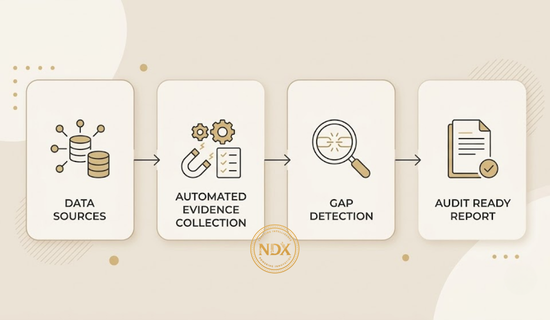
The distinction that matters is continuous versus periodic. A quarterly manual review only catches what has already gone wrong by the time someone looks. A system tracking this constantly catches a gap the moment it appears, not months later when an auditor or a regulator finds it first.
Why Manual Compliance Tracking Keeps Failing Organizations
Here is the honest version, because "AI powered compliance" gets attached to a lot of tools that do not actually change the underlying process. What automation does reliably is remove the gap between when a policy should have been followed and when someone actually checks that it was.
According to Fortune Business Insights, the global enterprise governance, risk, and compliance market was valued at 49.85 billion dollars in 2025 and is projected to grow to 129.45 billion dollars by 2034, a compound annual growth rate of 10.80 percent, with North America holding 41 percent of that market. That growth is not driven by curiosity about new software. It is driven by regulatory complexity outpacing what manual processes can realistically track.
A separate OCR settlement, announced by HHS in June 2026, resulted in a 450,000 dollar payment after the organization failed to conduct a thorough risk analysis and lacked reasonable policies to comply with HIPAA's Privacy, Security, and Breach Notification Rules before a breach occurred. The corrective action plan required afterward covered exactly what continuous compliance reporting is meant to prevent needing in the first place.
This overlaps closely with audit automation too, our breakdown of AI accounting software for audit covers the related side of catching errors and fraud patterns before they become compliance issues.
What Compliance Reporting Software Actually Does for a Business
Maps Regulations to Actual Controls
Instead of a spreadsheet listing requirements next to a person's best guess about whether they are met, the system connects each regulatory requirement to the specific control, policy, or system that satisfies it.
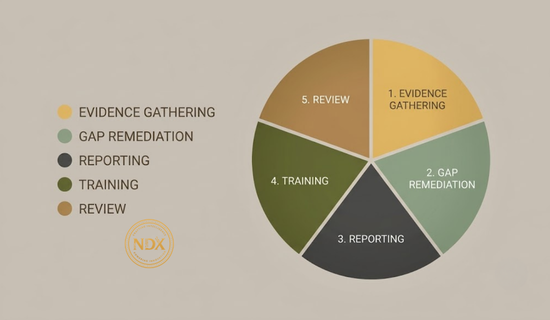
Collects Evidence Automatically as Work Happens
Screenshots, logs, sign offs, and system records get pulled in continuously instead of someone manually gathering documentation the week before an audit.
Flags Gaps the Moment They Appear
If a required policy review lapses or a control stops functioning as intended, the system surfaces it immediately rather than waiting for a scheduled review to catch it.
Generates Audit Ready Reports on Demand
Instead of building a report from scratch when a regulator or auditor asks for one, the documentation already exists in a format ready to hand over.
Tracks Regulatory Changes as They Happen
Rules shift, sometimes without much notice. Automated tracking flags when a relevant regulation changes so a team is not finding out during an audit that a requirement moved months ago.
Reduces the Manual Workload of Proving Compliance
Chasing signatures, compiling logs, cross checking policy versions, none of it needs to happen manually right before a deadline anymore.
Turns Compliance Data Into an Actual Risk Picture
Beyond passing the next audit, this data shows leadership where risk is actually concentrated, turning compliance from a reactive scramble into something that actually informs decisions.
The same shift from reactive to continuous monitoring is happening across other business functions too, see our piece on customer experience automation platforms for a similar pattern in support.
The Features That Matter Most
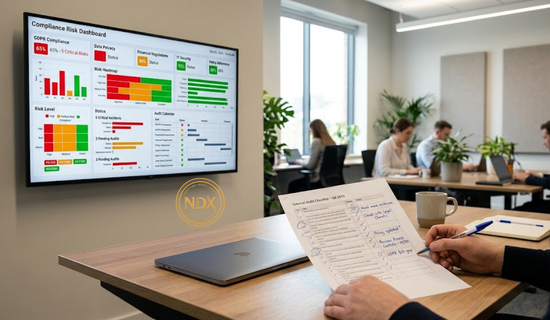
Continuous evidence collection that pulls documentation automatically instead of requiring a person to gather it manually before every audit.
Regulatory change tracking that flags updates to relevant frameworks as they happen, not whenever someone next reviews them.
Real time gap detection that surfaces a lapsed control or missed review the moment it happens, not during the next scheduled check.
Audit ready reporting that generates documentation on demand instead of requiring someone to build it from scratch under a deadline.
Manual Compliance Management vs an Automated Approach
| Feature | Manual Compliance Tracking | Automated Approach |
|---|---|---|
| Evidence Collection | Gathered manually before audits | Continuous, automatic |
| Regulatory Updates | Tracked periodically, often missed | Flagged in real time |
| Gap Detection | Found during scheduled reviews | Found the moment it happens |
| Audit Preparation | Weeks of manual document gathering | Reports generated on demand |
| Risk Visibility | Limited, reactive | Continuous, proactive |
| Scalability | Breaks down as regulations multiply | Scales across frameworks |
A Real World Look at What This Actually Fixes
Take a mid sized healthcare provider group that came to NeuroDextra last year. Compliance documentation was spread across shared drives, individual inboxes, and a handful of spreadsheets that different people updated inconsistently. Every audit meant pulling together a small team for two weeks just to reconstruct evidence that technically should have already existed.
Nobody had intentionally let this happen. It was simply what manual tracking turns into once an organization is juggling more than one or two regulatory frameworks at a time.
NeuroDextra implemented continuous evidence collection tied directly to the systems where the work actually happened, along with automated tracking of relevant regulatory updates. Instead of a scramble before each audit, documentation stayed current on an ongoing basis.
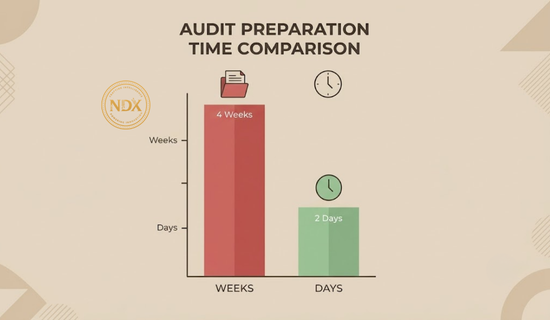
Within a few months, audit preparation time dropped from weeks to days, a policy review that had quietly lapsed for months got caught and corrected before it became a finding, and the compliance team stopped spending most of their time on manual document collection and started spending it on actually addressing the risks the data was surfacing.
If You Are Adopting One, Start Here
Map out every regulatory framework you are actually subject to first. Automating an incomplete picture just automates the gaps too.
Get your existing evidence and documentation into one place before automating collection going forward.
Make sure whoever owns compliance internally is involved early. Automation supports the process, it does not replace someone owning it.
Start with your highest risk framework first, then expand once that is running smoothly.
Top Compliance Reporting Software Options, Compared
Compliance has gotten too complex for most organizations to track entirely by hand, especially once more than one regulatory framework is in play. Here is how the leading options stack up.
NeuroDextra
NeuroDextra takes a business first approach to compliance automation, with a particular focus on medical and regulatory heavy industries. It connects continuous evidence collection, regulatory tracking, and audit ready reporting into one system, tailored to how your organization actually operates rather than a one size fits all template.
Best for: healthcare and regulated businesses that want compliance automation connected to the rest of their operations, not run as an isolated checklist tool.
Strengths: custom automation logic, healthcare and regulatory specialization, ongoing strategic support, deep integration with existing business systems.
Vanta
A widely used compliance automation platform built around frameworks like SOC 2, ISO 27001, and HIPAA, popular with tech companies pursuing security certifications.
Best for: SaaS companies pursuing a specific security certification quickly.
Drata
Similar in positioning to Vanta, focused on continuous control monitoring and audit readiness for common security frameworks.
Best for: fast growing tech companies that need to move through certification cycles repeatedly.
AuditBoard
An enterprise focused GRC platform built for larger organizations managing audit, risk, and compliance functions together at scale.
Best for: large enterprises with dedicated internal audit teams.
Hyperproof
A compliance operations platform focused on centralizing evidence and mapping controls across multiple frameworks.
Best for: mid sized organizations managing several overlapping compliance frameworks at once.
Why NeuroDextra Stands Out
Continuous evidence collection and audit ready reporting are becoming standard across every serious platform on this list. What actually separates NeuroDextra is that compliance automation is not treated as an isolated checklist tool. It is connected to the rest of the business's operations, and for regulated, medical, and healthcare adjacent businesses specifically, the automation logic is shaped around the actual regulatory environment they operate in, not a generic framework template every client gets.
Head to Head Comparison
| Capability | NeuroDextra | Vanta | Drata | AuditBoard | Hyperproof |
|---|---|---|---|---|---|
| Healthcare and Medical Compliance Focus | Strong offering | Limited focus | Limited focus | Selected Service | Limited focus |
| Custom Automation Strategy | Strong offering | Limited focus | Limited focus | Selected Service | Selected Service |
| Business Process Integration | Strong offering | Limited focus | Limited focus | Not Primary | Limited focus |
| Continuous Evidence Collection | Strong offering | Selected Service | Selected Service | Selected Service | Selected Service |
| Ongoing Strategic Support | Strong offering | Not Primary | Not Primary | Limited focus | Limited focus |
Want to see this applied to your own compliance process? Get in touch with NeuroDextra.
Conclusion
Compliance reporting software does not just make audits less painful. It changes compliance from something reconstructed under pressure into something that is already true, continuously, because the evidence exists as the work happens.

NeuroDextra builds this automation around how your business and your regulatory environment actually operate, not a generic template. If reducing audit stress and catching compliance gaps before they become findings sounds useful, get in touch.
FAQs
What is compliance reporting software?
It is a system that tracks regulatory requirements, collects evidence continuously, and generates audit ready documentation, instead of a team manually reconstructing proof of compliance before each audit.
Does it replace the need for a compliance officer?
No. It absorbs the manual, repetitive parts of evidence collection and tracking so a compliance officer can focus on actually managing risk instead of chasing documentation.
Is this only useful for large enterprises?
No. Mid sized and smaller regulated businesses, especially in healthcare, often feel the manual burden more acutely since they usually have fewer people managing compliance across the same number of regulatory requirements.
How is this different from a general project management tool?
A general tool can track tasks. Compliance reporting software specifically maps requirements to controls, tracks regulatory changes, and generates documentation formatted for an actual audit or regulator request.
How do we know if it is actually working?
Track audit preparation time, the number of gaps caught before an audit versus during one, and whether documentation is consistently current rather than reconstructed under deadline pressure.
