
Facebook Advertising Automation: 7 Ways It Cuts Wasted Ad Spend
Table of Contents
What Is Facebook Advertising Automation, Really?
Why Manual Campaign Management Is Losing Ground
What Facebook Advertising Automation Actually Does
The Features That Matter Most
Manual Management vs an Automated Approach
A Real World Look at What This Actually Fixes
If You Are Adopting One, Start Here
Top Facebook Advertising Automation Options, Compared
Why NeuroDextra Stands Out
FAQs
If you have ever spent a Tuesday afternoon manually adjusting bids across a dozen ad sets, only to watch performance dip anyway, you already know the problem. Facebook and Instagram advertising is not simple anymore. There are too many placements, too many audience signals, and too many decisions happening every hour for a person to keep up with all of it by hand.
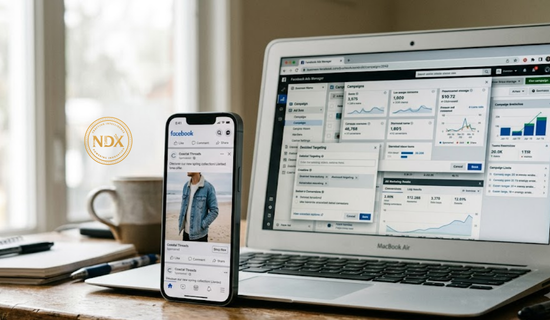
That is exactly what facebook advertising automation exists to solve. Instead of a marketer manually adjusting budgets, testing creative, and second guessing targeting, machine learning handles the repetitive decisions in real time, freeing people up to focus on strategy and creative direction instead of babysitting a dashboard.
This is not a small shift either. According to Meta's Q2 2026 earnings call, the company's Advantage+ automated ad suite reached an annual revenue run rate of 75 billion dollars, with 9 million small businesses now using at least one AI ad creative tool on Meta's platforms. Automation on this platform has gone from a nice to have to the default way most advertisers now run campaigns.
We will get into what this actually looks like in practice, why it matters more than it seems on the surface, and which options are worth considering.
Curious what this could look like for your ad spend? NeuroDextra can walk you through it.
What Is Facebook Advertising Automation, Really?
Cut through the jargon, and it comes down to software making the decisions a human used to make manually: who sees an ad, how much to bid, which creative to show, and when to shift budget toward what is actually working.
Automatically tests and rotates ad creative based on real performance data
Shifts budget toward the audiences and placements that convert
Adjusts bidding in real time instead of on a daily or weekly schedule

The difference between this and old school campaign management is speed and scale. A person checking a dashboard once a day is always reacting to what already happened. An automated system is adjusting constantly, often within minutes of a shift in performance, which matters a lot when ad costs can change hour to hour.
Why Manual Campaign Management Is Losing Ground
Here is the honest version, because "AI powered" gets attached to everything these days: automation genuinely helps, but only when the campaign structure and creative feeding it are solid to begin with.
What automation does reliably is process signals a human simply cannot track manually, thousands of impressions, clicks, and conversions happening simultaneously across audiences. It can shift spend toward a winning ad set within hours instead of waiting for a weekly review, and it can test more creative variations in a day than a person could set up in a week.
According to Meta's Q2 2026 earnings report, advertisers using Advantage+ campaigns saw an average return of 4.52 dollars for every dollar spent, about 22 percent higher than manually configured campaigns. That gap is exactly why so many advertisers have moved away from fully manual setups over the past couple of years.
What Facebook Advertising Automation Actually Does for a Business
Handles Bidding Without Constant Supervision
Bids that once needed daily manual adjustment now respond to auction conditions automatically, catching cost spikes or dips a person would only notice a day later.

Tests Creative at a Scale People Cannot Match
Instead of manually building five ad variations and waiting a week for results, automated systems can test dozens of combinations, images, headlines, and calls to action, and shift spend toward whichever version is actually converting.
Finds Audiences a Person Would Never Think To Target
Rather than relying on a marketer's guess about who might buy, automation identifies patterns in existing customer data and finds lookalike audiences that share those same behaviors.
Reallocates Budget Toward What Is Actually Working
If one ad set is converting well and another is burning budget with nothing to show for it, automated systems shift spend between them without waiting for someone to notice in a weekly report.
Cuts Down the Repetitive Manual Work
Pausing underperforming ads, adjusting daily budgets, rotating stale creative, none of it needs to be done by hand anymore, which frees up time for the strategic decisions that actually move the needle.
Surfaces Patterns Buried in the Data
Beyond the day to day campaign management, this data shows which audiences, creative styles, and offers are actually driving return, information that used to take a person hours of manual digging to uncover.
The Features That Matter Most

Rule based budget shifting that moves spend automatically between ad sets based on real time performance, not a weekly check in.
Dynamic creative testing that rotates images, copy, and calls to action on its own, without someone manually building new ad variations every few days.
Audience expansion that finds new, relevant buyers based on existing customer behavior instead of a marketer's best guess.
Real time reporting that shows what is actually happening across campaigns without someone pulling numbers into a spreadsheet.
Manual Management vs an Automated Approach
| Feature | Manual Campaign Management | Automated Approach |
|---|---|---|
| Bid Adjustments | Daily or weekly, by hand | Continuous, real time |
| Creative Testing | Slow, limited variations | Fast, many variations at once |
| Budget Shifts | Delayed, reactive | Immediate, based on live data |
| Audience Discovery | Based on guesswork | Data driven, expands on its own |
| Reporting | Manual spreadsheet pulls | Automated, real time dashboards |
| Time Required | Significant, ongoing | Focused on strategy, not upkeep |
A Real World Look at What This Actually Fixes
Take a mid sized home services business that came to NeuroDextra earlier this year. Their Facebook ad account had grown messy over time, dozens of overlapping ad sets, budgets that had not been touched in months, and creative that had been running so long it had stopped performing without anyone noticing.
Nobody had the time to sit down and manually rebuild the account from scratch, and every week that passed meant more wasted spend going toward ads that had quietly stopped converting.
NeuroDextra restructured the account and layered in automated budget allocation and creative rotation, so instead of a person checking performance once a week, the system was shifting spend and refreshing creative continuously based on what was actually converting.
Within a couple of months, cost per lead came down noticeably, stale ads got phased out automatically instead of sitting untouched, and the marketing team stopped spending hours every week manually adjusting bids and budgets. That time went into building new campaign concepts instead of maintaining old ones.
If You Are Adopting One, Start Here
Clean up your existing account first. Automation makes existing problems worse, not better, if the structure underneath is messy.
Make sure your tracking is accurate before trusting automated decisions. Bad data feeding automation just produces bad decisions faster.

3. Keep producing new creative regularly. Automation can test what you give it, but it cannot invent fresh ideas on its own.
4. Start with one part of the account, like budget allocation, before automating everything at once.
Top Facebook Advertising Automation Options, Compared
Facebook and Instagram advertising has gotten too complex to manage entirely by hand, and every serious option now leans on automation in some form. Here is how the leading choices stack up.
NeuroDextra
NeuroDextra takes a business first approach, building automated ad management around how your business actually operates rather than a one size fits all template. It handles budget allocation, creative testing, and audience targeting as part of a broader system, not as an isolated tool.
Best for: businesses that want ad automation connected to the rest of their operations, not run in isolation.
Strengths: custom automation logic, ongoing strategic guidance, deep integration with existing business systems, hands on account management.
Meta Advantage+
Meta's own native automation suite, built directly into Ads Manager and increasingly the default setting for new campaigns.
Best for: advertisers who want automation without leaving the native platform.
Madgicx
A third party platform focused on AI driven audience targeting and creative analytics layered on top of Meta's ad platform.
Best for: data heavy advertisers who want deeper analytics than native tools provide.
Revealbot
A rules based automation tool that lets advertisers set custom triggers for budget and bid changes across campaigns.
Best for: teams that want fine grained control over specific automation rules.
Smartly.io
An enterprise focused platform combining creative automation with cross platform campaign management.
Best for: larger advertisers running high volume campaigns across multiple channels.
Why NeuroDextra Stands Out
Automated bidding and creative testing are becoming standard across every tool on this list. What actually separates NeuroDextra is that ad automation is not treated as a standalone task bolted onto marketing. It is connected to the rest of the business's operations, so the automation logic and reporting are shaped around how your business actually runs, not a generic playbook every client gets.
Head to Head Comparison
| Capability | NeuroDextra | Meta Advantage+ | Madgicx | Revealbot | Smartly.io |
|---|---|---|---|---|---|
| Custom Automation Strategy | Strong offering | Not Primary | Limited focus | Limited focus | Selected Service |
| Cross Channel Business Integration | Strong offering | Not Primary | Not Primary | Not Primary | Limited focus |
| Creative Testing Automation | Strong offering | Selected Service | Selected Service | Limited focus | Selected Service |
| Ongoing Strategic Support | Strong offering | Not Primary | Limited focus | Limited focus | Selected Service |
| Reporting Tied to Business Outcomes | Strong offering | Limited focus | Selected Service | Limited focus | Selected Service |
Want to see this applied to your own ad account? Get in touch with NeuroDextra.
📖 You May Also Find These Helpful
Modern Business Intelligence: Trends Defining the Future of Data Analytics
Top 5 AI Consultancy Firms in Texas to Transform Your Business in 2026
5 Best Automated Financial Audit Platforms for Smarter Financial Management
6 Best Accounting Software for Firms to Streamline Financial Tasks
Benefits of AI Accounting Software for Audit for Modern Businesses
Intelligent Data Management Platform: 7 Ways It Powers Data Driven Decision Making
Agentic AI for Data Management: 7 Ways It Transforms Business Operations
Customer Experience Automation Platform: 7 Ways It Transforms Business Growth
FAQs
What is facebook advertising automation?
It is the use of software and machine learning to handle bidding, creative testing, budget allocation, and audience targeting for Facebook and Instagram ad campaigns, instead of a person adjusting everything manually.
Does it replace the need for a marketer?
No. It absorbs the repetitive, data heavy decisions so a person can focus on strategy, creative direction, and the bigger picture instead of manual upkeep.
Will it work for a small budget?
Automated systems generally need enough conversion volume to learn from, so very small budgets may take longer to see the full benefit compared to accounts with steady conversion data.
How is this different from just using Meta's built in tools?
Meta's native automation handles what happens inside Ads Manager. A broader approach connects that automation to the rest of a business's systems and strategy, rather than treating ad performance as an isolated number.
How do we know if it is actually working?
Track cost per result, return on ad spend, and lead or sales quality before and after. If those numbers are not moving in the right direction, something in the setup needs attention, not the concept itself.
Conclusion
Facebook advertising automation does not just save time. It changes how quickly a business can react to what is actually working, cutting wasted spend and freeing people up to focus on strategy instead of manual upkeep.

NeuroDextra builds this automation around how your business actually operates, not a generic template. If reducing wasted ad spend and connecting your advertising to the rest of your operations sounds useful, get in touch.
