
Best Automated Trading Platform UK: 7 Ways It Changes How You Trade
Table of Contents
What Is an Automated Trading Platform, Really?
Why Manual Trading Keeps Losing Ground in the UK
What a Good Automated Trading Platform Actually Does
The Features That Matter Most
Manual Trading vs an Automated Platform
What a Recent Regulatory Review Actually Revealed
What UK Traders Are Actually Running Into
If You Are Adopting One, Start Here
Best Automated Trading Platform UK Options, Compared
Why NeuroDextra Stands Out
FAQs
If you have ever watched a trade setup you spotted hours ago play out exactly as expected, except you were in a meeting when it happened, you already understand the gap an automated trading platform exists to close. Markets do not pause for your schedule, and a strategy is only as good as someone's ability to actually execute it the moment conditions line up.
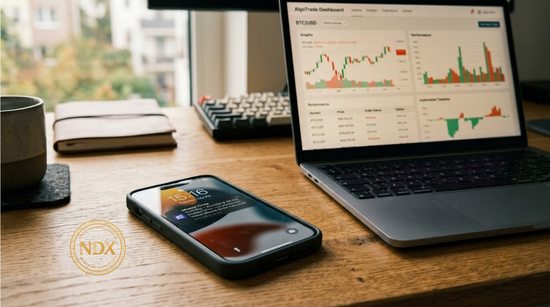
That is exactly what the best automated trading platform UK traders and firms are adopting actually does. Instead of a person manually watching charts and placing orders by hand, a defined, rule based strategy executes automatically the moment its conditions are met, consistently, without needing someone glued to a screen.
This is not a niche corner of finance anymore. According to Fortune Business Insights, the global algorithmic trading market was valued at 2.53 billion dollars in 2025 and is projected to grow from 2.72 billion dollars in 2026 to 4.33 billion dollars by 2034, with North America holding roughly 42 percent of that market and Europe, the UK included, representing a substantial and growing share alongside it. That growth is a big part of why so many businesses are actively comparing the best automated trading platform UK options available right now.
We will get into what the best automated trading platform actually does, what a recent UK regulatory review revealed about how well firms are actually managing their systems, and which options are worth a serious look.
Curious what a custom automated trading setup could look like for your business? NeuroDextra can walk you through it.
Nothing in this article is financial advice. Trading involves risk, and automation does not eliminate that risk, it changes how a strategy is executed.
What Is an Automated Trading Platform, Really?
Strip away the marketing language, and an automated trading platform comes down to software executing a defined set of rules without a person manually placing each trade:
Monitors market conditions continuously, including outside normal working hours
Executes entries and exits the moment predefined conditions are met
Applies the same rules consistently, without hesitation or emotional second guessing
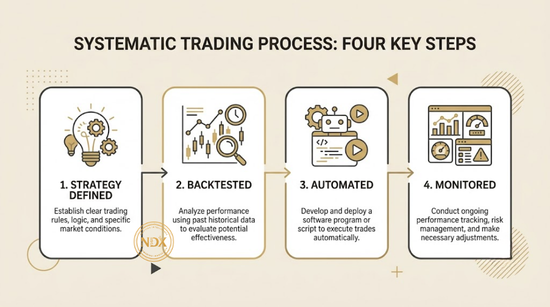
The distinction that actually matters when comparing the best automated trading platform UK options is between a basic script and a properly built system. A simple script fires on one condition and breaks the moment market behavior shifts even slightly. A properly built automated trading platform includes risk controls, position sizing logic, and monitoring that flags when something is behaving unexpectedly, rather than quietly continuing to execute a strategy that has stopped working.
Why Manual Trading Keeps Losing Ground in the UK
Here is the honest version, because "automated trading" gets oversold constantly. An automated trading platform does not guarantee better outcomes, and it does not remove risk. What it reliably does is remove the execution gap between when a condition is met and when a person actually acts on it.
A person watching charts manually is limited by attention, time zones, and simple fatigue. An automated trading platform applies the same rule at 3am as it does at 3pm, without needing a break. That consistency is the actual value, not some implied promise of guaranteed returns. Strategy quality still matters more than anything else, automation just removes the gap between having a good strategy and actually executing it reliably. This same shift from manual effort to continuous, automated execution is playing out across other business functions too, our breakdown of Facebook advertising automation covers a similar pattern in ad spend.
What a Good Automated Trading Platform Actually Does
Executes Without Needing Constant Supervision

Once a strategy is defined and tested, the best automated trading platform executes trades automatically when conditions are met, without someone needing to be watching a screen at that exact moment.
Applies Risk Rules Consistently
Position sizing, stop losses, and exposure limits get applied the same way every time, removing the inconsistency that creeps in when a person is making judgment calls under pressure.
Backtests Strategies Against Historical Data
Before a strategy ever risks real capital, a good automated trading platform tests it against historical market data to see how it would have performed, surfacing weaknesses before they become expensive.
Monitors Multiple Conditions Simultaneously
A person can realistically track a handful of setups at once. An automated trading platform can monitor far more conditions in parallel without losing accuracy.
Flags Unusual Behavior Instead of Silently Continuing
A properly built automated trading platform includes monitoring that surfaces when market conditions shift outside what a strategy was designed for, rather than continuing to execute blindly.
Removes Emotional Decision Making From Execution
The strategy was defined in advance, under calm conditions. Execution happens according to that plan, not according to how someone feels in the moment a trade is triggered.
Frees Up Time for Strategy Development
Instead of spending hours manually watching for entry points, that time goes into refining the actual strategy and understanding why it does or does not work.
The Features That Matter Most
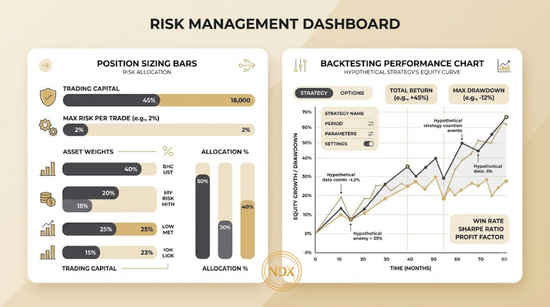
Backtesting against historical data, so a strategy's logic gets tested before it risks real capital, not after. This is one of the clearest signs of the best automated trading platform versus a basic script.
Built in risk controls, including position sizing and stop loss logic that apply automatically, not optionally.
Real time monitoring and alerts, so unusual behavior gets flagged immediately rather than discovered after the fact.
Transparent, auditable logic, so every trade can be traced back to the specific rule that triggered it, something the best automated trading platform UK businesses choose always includes.
Thinking about what an automated trading platform would look like built around your own strategy? NeuroDextra can talk you through it.
Manual Trading vs an Automated Platform
| Feature | Manual Trading | Automated Platform |
|---|---|---|
| Execution Speed | Dependent on attention | Immediate on trigger |
| Consistency | Varies with fatigue, emotion | Applies rules identically every time |
| Monitoring Capacity | Limited to what a person can track | Many conditions simultaneously |
| Risk Rule Application | Manual, can be skipped under pressure | Applied automatically |
| Strategy Testing | Difficult to test systematically | Backtested against historical data |
| Time Required | Significant, ongoing attention | Focused on strategy, not execution |
What a Recent Regulatory Review Actually Revealed
In August 2025, the UK's Financial Conduct Authority published findings from a multi firm review of algorithmic trading controls. The review looked at governance frameworks, algorithm testing, deployment procedures, and surveillance systems across a sample of firms using algorithmic trading, exactly the kind of oversight anyone evaluating the best automated trading platform UK options should care about.
The findings are worth sitting with. Despite showing some progress in governance since the FCA's previous review in 2018, many firms still fell short of regulatory expectations. In some cases, a lack of technical knowledge internally limited the firm's ability to actually challenge or question how their own trading algorithms were behaving. Some firms relied on vendor testing or limited market scenarios rather than genuinely stress testing how a system would hold up under volatile conditions. The FCA also noted that some firms lacked formal documentation of procedures, with no clear definition of what actually counted as a material change to an algorithm that would require re review.
This is exactly the gap between having an automated trading platform and having one that is actually properly governed. A platform executing trades automatically is not the hard part anymore, software has solved that. The hard part, and the part regulators are specifically flagging, is whether a firm actually understands what its own system is doing, has tested it against real stress conditions, and has clear documentation around what changes to it and why.
That is a governance and build quality problem, not a software availability problem, and it is exactly where a lot of off the shelf platforms fall short. We cover a similar continuous versus periodic tracking gap in our breakdown of compliance reporting software, the underlying pattern shows up across regulated industries, not just trading.
What UK Traders Are Actually Running Into
Scroll through r/Trading and r/FxGeckoAPP for even a few minutes, and the FCA's regulatory concerns stop being abstract.
One recent r/Trading thread captures the structural confusion well. A trader asking how to actually trade for a living in the UK pointed out that trading through a limited company narrows you down to a handful of brokers with limited access to US stocks, while the sole trader route raises its own financial questions. There is no single, obvious path, and that uncertainty alone pushes a lot of people toward whatever platform looks easiest to set up, regardless of whether it is properly regulated.
That matters because of what shows up in a separate community alert on r/FxGeckoAPP. The post tracks the FCA's own warning list and flagged roughly thirty newly added unauthorized or clone firms in a single update, including at least three operations cloning the identity of already FCA authorised businesses. The post's own breakdown of the risk is blunt: clone firms work because a trader checks the FCA register, sees a familiar sounding name, and never notices the website domain or phone number is slightly different from the real, registered firm. Unregulated platforms also fall outside negative balance protection and the Financial Services Compensation Scheme entirely, meaning a trader has no safety net at all if something goes wrong.
Put the FCA's own internal review alongside what traders are flagging to each other in real time, and the picture is consistent. Even properly regulated firms are still catching up on algorithm governance, and plenty of traders are navigating a landscape where distinguishing a legitimate platform from a clone takes real, active vigilance. An automated trading platform built without proper regulatory grounding and documentation is not just a technical risk, it is the exact gap both regulators and traders themselves are actively flagging right now.
If You Are Adopting One, Start Here
Define and document your strategy fully before automating any part of it. An automated trading platform executes what you give it, it does not design the strategy for you.
Backtest against a meaningful range of historical conditions, not just the market environment the strategy happened to be built in.
Build in risk controls from day one, position sizing and stop losses should never be optional add ons.
4. Keep documentation of what the system does and why, including a clear record of any changes, exactly the gap the FCA flagged in its review.
5. Only ever build or trade through an FCA authorised entity. Cross check the exact domain against the FCA Register yourself, clone firms count on traders skipping this step.
Best Automated Trading Platform UK Options, Compared
The UK has no shortage of platforms claiming to offer automated trading. Here is how the leading approaches to the best automated trading platform UK traders can choose from actually stack up.
NeuroDextra
NeuroDextra takes a business first approach, building custom automated trading systems around a client's actual defined strategy and risk parameters, rather than offering a generic template everyone gets. It focuses heavily on the governance layer, documentation, backtesting, risk controls, that the FCA's own review flagged as where many firms fall short.
Best for: businesses and serious traders who want a custom built automated trading platform with proper documentation and risk controls baked in from the start, not an off the shelf script.
Strengths: custom strategy implementation, backtesting built into the development process, documented risk controls, ongoing monitoring and support.
Capitalise.ai
A UK based no code platform that lets users describe trading strategies in plain language, which then get converted into automated rules.
Best for: individual traders who want to automate a strategy without writing code.
Coinrule
Another UK based platform focused on rule based automation, primarily aimed at crypto markets with a visual strategy builder.
Best for: traders focused specifically on crypto who want simple, rule based automation.
QuantConnect
An open source, cloud based algorithmic trading platform aimed at more technical users building and testing their own strategies in code.
Best for: developers and quants comfortable writing their own strategy logic.
3Commas
A broader automation platform offering bot building tools primarily for crypto trading, with a large user base.
Best for: retail crypto traders wanting pre built bot templates.
Why NeuroDextra Stands Out
Executing trades automatically is table stakes at this point, every platform on this list does it in some form. What actually separates NeuroDextra as the best automated trading platform UK businesses can build around is the governance layer. Given what the FCA's own 2025 review found, undocumented changes, limited stress testing, insufficient internal understanding of how a system behaves, the real differentiator is not whether a platform can automate a trade, it is whether the system is built, tested, and documented properly enough to withstand scrutiny, not just market conditions.
Head to Head Comparison
| Capability | NeuroDextra | Capitalise.ai | Coinrule | QuantConnect | 3Commas |
|---|---|---|---|---|---|
| Custom Strategy Build | Strong offering | Not Primary | Not Primary | Selected Service | Not Primary |
| Documented Risk Controls | Strong offering | Limited focus | Limited focus | Selected Service | Limited focus |
| Backtesting Support | Strong offering | Selected Service | Selected Service | Strong offering | Limited focus |
| Ongoing Monitoring and Support | Strong offering | Not Primary | Not Primary | Limited focus | Limited focus |
| Business Process Integration | Strong offering | Not Primary | Not Primary | Not Primary | Not Primary |
Want to see what a properly documented, custom built automated trading platform looks like? Get in touch with NeuroDextra.
FAQs
What is the best automated trading platform in the UK?
It depends on what you're building. No code tools like Capitalise.ai suit individual traders automating a simple strategy, while businesses wanting the best automated trading platform UK can offer, one with proper documentation and risk controls, typically need a more tailored approach rather than an off the shelf template.
Is automated trading legal in the UK?
Yes, automated trading is legal when carried out through an FCA regulated broker or firm that permits it, and firms using an automated trading platform are subject to specific regulatory expectations around governance and controls.
Does automated trading guarantee better results than manual trading?
No. An automated trading platform does not guarantee profit or eliminate risk. It removes the execution gap between a strategy's rules and acting on them consistently, but the quality of the underlying strategy still matters most.
What did the FCA's review of algorithmic trading actually find?
Published in August 2025, the review found that many firms still fell short of regulatory expectations around algorithm governance, including insufficient stress testing, limited internal technical understanding of their own systems, and inadequate documentation of changes.
How do we know if an automated trading platform is actually working well?
Beyond performance, check whether the system is properly documented, has been backtested against a meaningful range of conditions, and includes clear risk controls, the exact areas regulators have flagged as commonly lacking.
Conclusion
The best automated trading platform UK traders and businesses can adopt does not just execute trades faster. It closes the gap between having a defined strategy and actually running it consistently, with the governance and documentation to back it up, exactly what UK regulators have been pointing to as the real differentiator.

NeuroDextra builds the best automated trading platform UK businesses can rely on around your actual strategy and risk parameters, not a generic template. If you want a custom automated trading setup with proper documentation and risk controls built in, get in touch.
